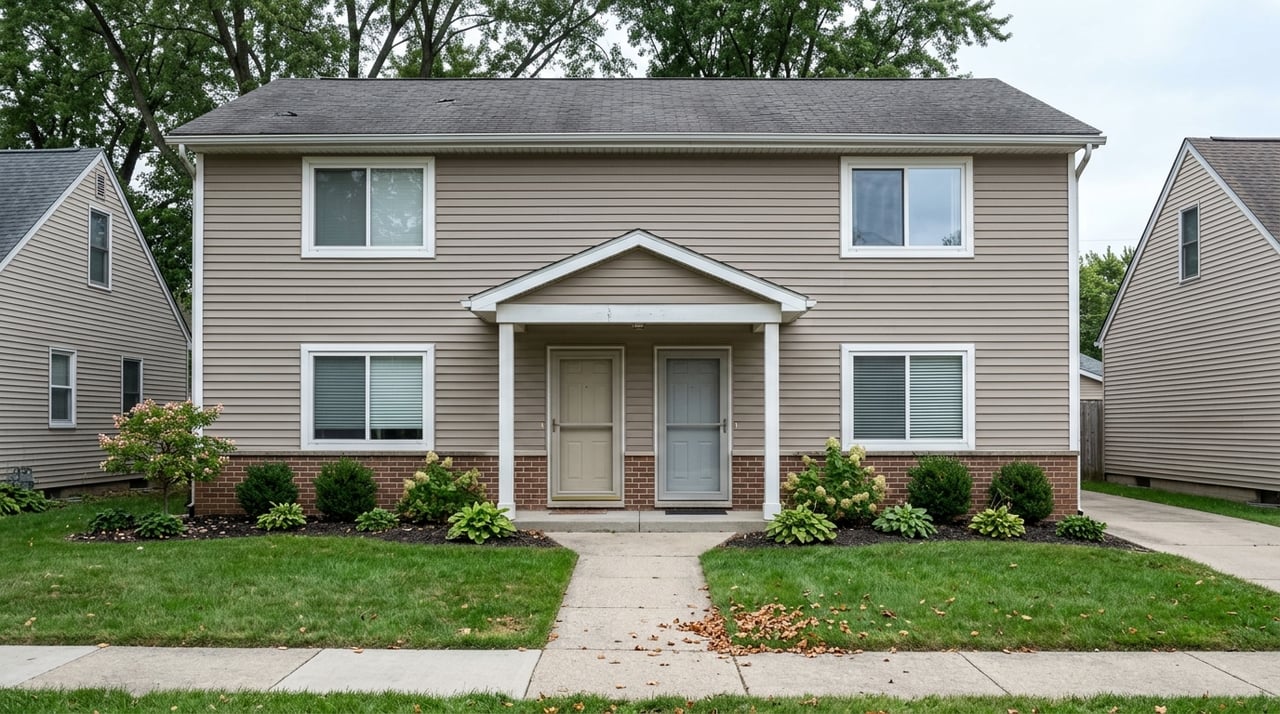
Buying a home in Glenside can feel like a stretch if you are trying to balance your monthly payment with today’s prices. That is one reason many buyers look at house hacking, especially with duplexes and other small multifamily properties that let you live in one unit and rent out another. If you want to understand what that can look like in Glenside, what financing may be available, and what due diligence matters most, you are in the right place. Let’s dive in.
What house hacking means in Glenside
House hacking usually means buying a property, living in part of it as your primary residence, and using rent from another unit to help offset your housing costs. In Glenside, that often points buyers toward two-unit properties and, in some cases, one-to-four-unit homes that qualify for owner-occupant financing.
Glenside is a relatively established market. According to the U.S. Census QuickFacts for Glenside CDP, the community had 7,737 residents in 2020, a 76.9% owner-occupied rate, a median household income of $101,676, and a median home value of $390,600. That local pricing backdrop is exactly why many buyers explore ways to make ownership more manageable.
Why small multifamily draws attention
A small multifamily property can give you more than one path to value. You may be able to reduce your out-of-pocket monthly cost, build equity while living on site, and potentially keep the property as a long-term asset if your plans change later.
In Glenside, you are not usually looking at large apartment buildings when you house hack. More often, the relevant options are duplexes or smaller multifamily layouts with separate units, separate entrances, and features that support day-to-day function for both owner and tenant.
Common property types to watch
Recent Glenside-area listings show the kinds of setups buyers should look for. For example, 647 Roberts Ave was marketed as a legal duplex with two identical 2-bedroom, 1-bath units, separate addresses, separate meters, separate heating, and a two-car garage.
Other examples include 1106 E Pleasant Ave as a 2,720-square-foot duplex with two 2-bedroom units and four off-street spaces, and 216 E Glenside Ave as a duplex-style two-unit property with a four-car garage. A nearby Springfield Township example at 8015 Gladstone Rd included one 2-bedroom unit and one 3-bedroom unit, which shows that layouts can vary even when the house hacking concept stays the same.
When you review properties like these, key details matter:
- Unit count n- Separate utilities or meters
- Separate ingress and egress
- Off-street parking or garage space
- Bedroom count per unit
- Whether the property is marketed and documented as a legal duplex or multifamily use
Glenside price and rent signals
If you are considering house hacking, you need to compare the purchase side and the rent side at the same time. The local market does show examples of both, but it is smart to treat them as guideposts rather than guarantees.
On the purchase side, current Glenside duplex and triplex search results showed listings that included a $499,000 multifamily, a $639,000 multifamily, and an auction property at $205,000. Recent closed examples mentioned in the local research include 1106 E Pleasant Ave at $525,000 and 8015 Gladstone Rd at $350,000 in 2023.
On the rent side, RentCafe’s Glenside market data puts average apartment rent at $1,513, with 1-bedrooms at $1,276, 2-bedrooms at $1,613, and 3-bedrooms at $1,812. The same research notes that other platforms show somewhat different figures, which is normal because each site uses a different sample and method.
That is why your underwriting should use a reasonable rent band, not one perfect number. If many 2-bedroom rentals are landing somewhere around the mid-$1,500s to upper-$1,900s in current listings, that gives you a starting point for analysis, but you still need to leave room for vacancy, repairs, and real-world ownership costs.
Owner-occupant financing options
One of the biggest advantages of house hacking is that you may qualify for financing designed for buyers who will live in the property. For many first-time buyers and budget-conscious move-up buyers, that can make a meaningful difference.
FHA for one- to four-unit homes
According to HUD’s FHA policy handbook, FHA single-family programs can apply to one- to four-family properties when the home is your owner-occupied principal residence. HUD also states that the minimum required investment is 3.5% in most cases.
That makes FHA one of the first financing paths many buyers ask about when looking at duplexes. It can be especially relevant if you want a lower down payment and plan to live in one unit.
VA for eligible buyers
For eligible borrowers, a VA-backed purchase loan can also be used for a property with up to four units, as long as you live in the home. The research report notes that VA financing can offer no down payment if the sales price does not exceed the appraised value.
If you qualify for VA financing, this is often one of the strongest house hacking tools available. It is still important to confirm how the property type and condition fit lender and appraisal requirements.
HomeReady and low-down-payment conventional options
The research also notes that Fannie Mae’s HomeReady guidelines allow a two- to four-unit principal residence with a 3% minimum contribution from the borrower’s own funds unless a grant is used. That can create another route for buyers who want conventional financing but still want the flexibility of a small multifamily primary residence.
Not every lender offers the same programs the same way. That is why the loan conversation should start early, before you narrow your search too far.
Rental income can help, but verify early
Projected rent is often part of the appeal of house hacking, but buyers should not assume every lender will count income the same way. The rules around projected rental income, documentation, and reserves can affect what you can qualify for.
Fannie Mae’s rental income guidance explains that rental-income documentation for a two- to four-unit principal residence is handled similarly to an investment property, and the reserve rules specifically address two- to four-unit principal residence transactions. In practical terms, that means your lender should review the property type and rent assumptions before you make an offer strategy around them.
This is one of the most common places buyers get tripped up. A property may look good on paper, but the lender’s treatment of projected rent can change the numbers quickly.
Zoning matters more than the address name
One of the most important Glenside-specific details is that you cannot assume the same rules apply across the whole area. Glenside spans both Abington Township and Cheltenham Township, so zoning and permitted use need to be checked by parcel.
The Census QuickFacts page gives you community context, but zoning is more local than the community name. The research report notes that Montgomery County planning data places Glenside in both townships, which is why parcel-by-parcel verification matters.
Abington Township duplex rules
Abington Township’s zoning resources define an H-4 Duplex Dwelling Unit as a two-family building and list requirements that include one lot, separate ingress and egress, public water and sewer for approved lots, a minimum lot size of 7,500 square feet, and a maximum bedroom capacity of three bedrooms per unit. The township’s use matrix also shows that allowed status varies by zoning district.
That means a duplex-style building in Glenside is not automatically a compliant duplex just because it looks like one. The exact parcel, district, and any overlays need to be reviewed.
Cheltenham Township duplex rules
Cheltenham Township’s code also defines a duplex unit as a two-family building with one dwelling unit above the other, located on one lot with front, rear, and two side yards, along with separate ingress and egress. Similar building forms can therefore face different standards depending on which side of the township line they are on.
For buyers, this is not just a technical detail. It can affect financing, appraisal, insurance conversations, and your confidence that the property is being used as represented.
Due diligence checklist for buyers
Before you make an offer on a Glenside house hacking property, it helps to slow down and verify the basics. A solid checklist can save you from expensive surprises.
Here are the practical next steps supported by the local research:
- Confirm whether the property is in Abington or Cheltenham and verify the parcel details through local planning resources.
- Get written zoning confirmation before underwriting if the property’s use is a key part of your strategy.
- Ask your lender whether FHA, VA, or HomeReady is the best fit and how much projected rent they may count.
- Verify unit count, separate utilities, meters, parking, and separate ingress and egress.
- Use current asking rents as a ceiling for your analysis, not a promise.
- Build in room for repairs, vacancy, and ongoing maintenance.
A careful review is especially important with older suburban housing stock, where the current layout and the legal use do not always line up as neatly as a listing description suggests.
Is house hacking in Glenside worth it?
For the right buyer, it can be a smart way to enter the market with more flexibility. If you are comfortable living on site, sharing a property with another household, and doing the upfront homework, a duplex or other small multifamily home may help you buy sooner or carry your monthly costs more comfortably.
The key is to stay disciplined. In Glenside, the opportunity is real, but so is the need for good zoning review, thoughtful financing prep, and conservative rent assumptions.
If you want help evaluating duplexes, comparing neighborhoods across the Greater Philadelphia suburbs, or building a realistic buying plan, connect with the Art Herling Team In Blue Bell. You will get local guidance, clear next steps, and support that helps you move forward with confidence.
FAQs
What is house hacking in Glenside real estate?
- House hacking in Glenside usually means buying a property, living in one unit as your primary residence, and renting another unit to help offset your monthly housing costs.
What property types work for house hacking in Glenside?
- The most common options are duplexes and other one-to-four-unit properties that can qualify for owner-occupant financing, subject to zoning and lender approval.
What financing options can buyers use for Glenside small multifamily homes?
- Common owner-occupant paths mentioned in the research include FHA, VA for eligible borrowers, and low-down-payment conventional options such as HomeReady.
Why does zoning matter for Glenside duplex buyers?
- Zoning matters because Glenside spans both Abington and Cheltenham townships, and the same type of building may be treated differently depending on the exact parcel and zoning district.
How should buyers estimate rent for a Glenside house hacking property?
- Buyers should use current local asking rents as a reasonable range, not a guaranteed number, and leave room for vacancy, repairs, and operating costs.
What should buyers verify before buying a Glenside duplex?
- Buyers should confirm the township, zoning, legal unit count, separate utilities or meters, parking, ingress and egress, and how a lender will treat projected rental income.